
I’ve Been Playing Wizardry for 43 Years. I Made My Own Mapping Tool
Vibe Coding a Dungeon Mapper for the Grandfather of RPGs
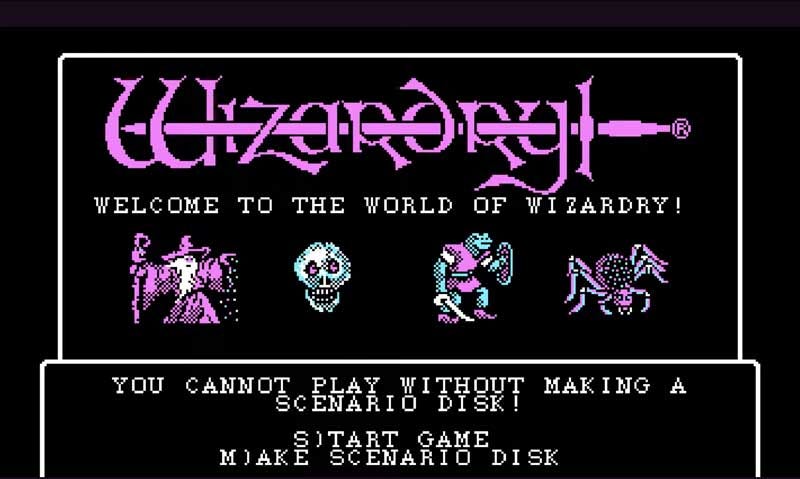
In 1982, I was a college student in Colorado. That summer, my friend got an Apple IIe, and six of us spent every evening that summer sitting in folding chairs around his computer playing Wizardry: Proving Grounds of the Mad Overlord. The game is meant for one player, but we didn’t play it that way. Each of us took ownership of one of the party’s six characters. We constantly argued about whether to press deeper or retreat to the surface, and freaked out when a character died permanently (the game was brutally unforgiving — we eventually learned we could cheat by turning off the computer as soon as a character was killed, but before it was recorded on the floppy disk).
It took all summer, but we successfully fought our way through all ten levels of the dungeon, and defeated the evil wizard Werdna.
If you’ve never played Wizardry, it’s a first-person dungeon crawler where you navigate a 10-level maze filled with monsters, traps, and treasures. The dungeon is rendered as simple wireframe graphics forming corridors and doors. You create a party of six adventurers, each with a class (fighter, mage, priest, thief, and others), descend into the dungeon beneath a castle, trying to retrieve a powerful amulet from Werdna on the bottom floor. Combat is turn-based. Death is permanent unless you can afford resurrection at the Temple of Cant — and even that can fail, turning your beloved character to ash.
Wizardry was released in September 1981 and became the most popular Apple II game of that year, selling 200,000 copies in its first three years. Along with Ultima, it invented the RPG video game genre. Dragon Quest, Final Fantasy, Shin Megami Tensei, The Bard’s Tale, Might and Magic — all trace their lineage back to Wizardry. The entire dungeon crawler genre exists because of this game.
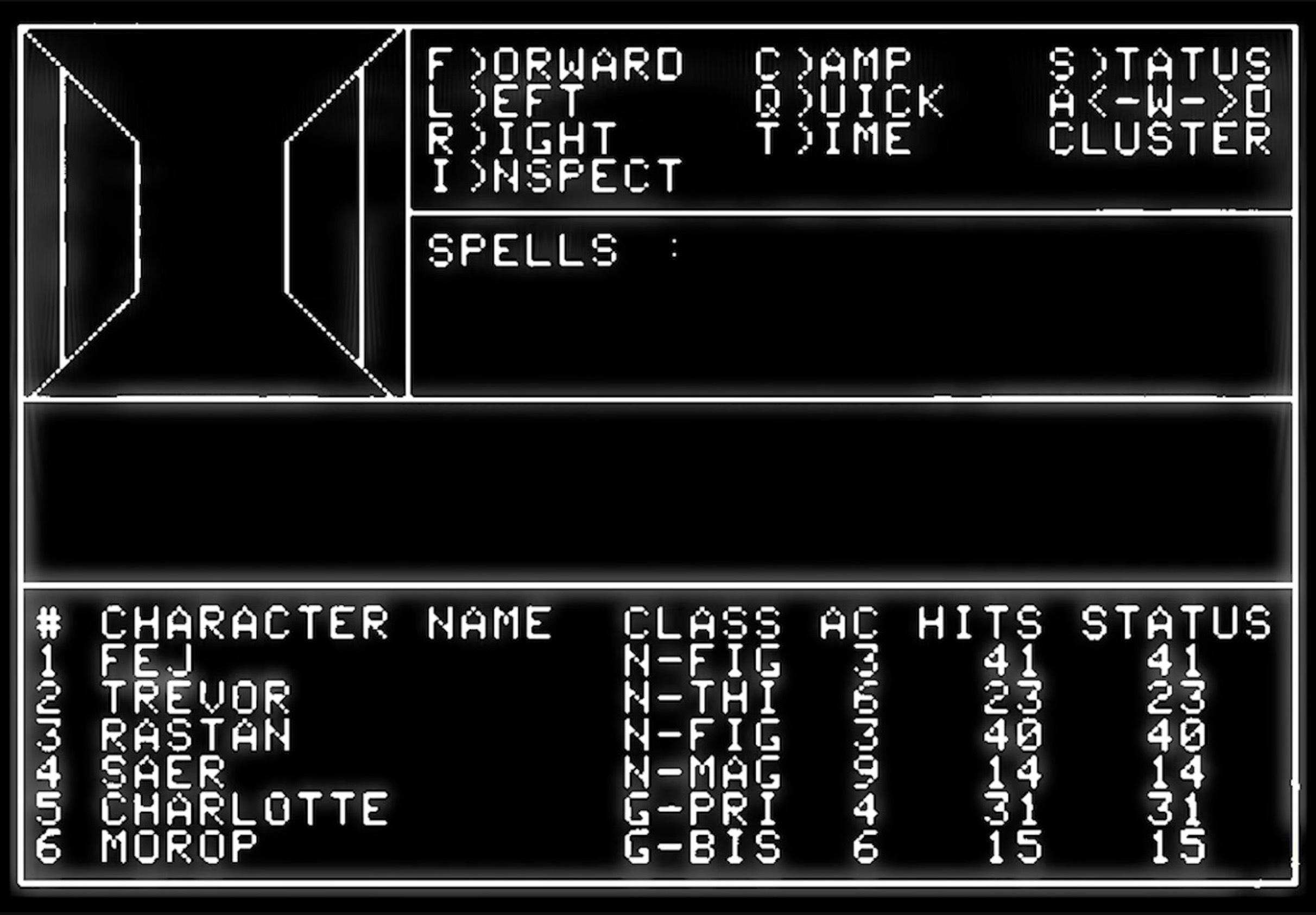
The game had no automap. You were expected to draw the dungeon yourself on graph paper. This wasn’t a limitation — mapping was an important part of gameplay. I was the team map-maker. I used graph paper, a mechanical pencil, and more than one eraser.
I’ve been replaying Wizardry on and off ever since, but I’ve never completed it after my first successful run in the summer of 82. But I keep trying.
I’m currently playing a version on the Switch, and I still love making the maps. It’s satisfying to explore a dungeon square by square, marking walls and doors, noting the location of spinners and teleporters that tried to disorient me. The map becomes a record of hard-won knowledge.
You can play the original PC version via an emulator at the Internet Archive.
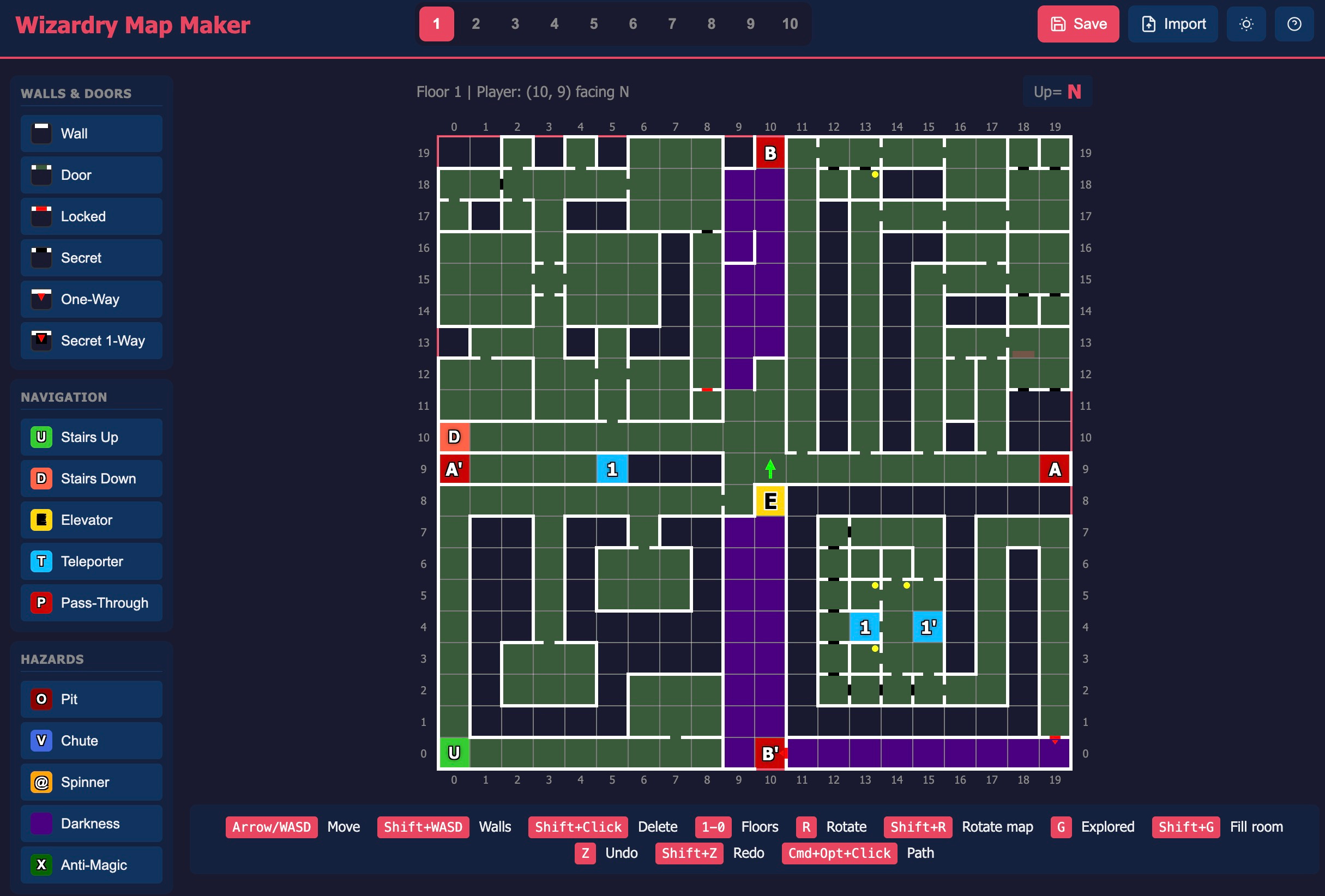
Instead of using paper and pencil this time around, I decided to build my own browser-based mapping tool. It was a fun project — the kind of thing where building it is as enjoyable as using it. The Wizardry Map Maker (screenshot below) still needs work, but I think it’s good enough to use as is. If you try it out and have any suggestions for improvements, let me know.
If you played Wizardry back in the day — or any of the dungeon crawlers it inspired — share in the comments. Did you map on graph paper? Did you have a party-wipe that still haunts you? Did you discover any cheats of your own?
Thanks for reading The Magnet!
Wow….This takes me back. Played Wizardry on my Apple ][+ with 64k…. My brother and I alternately mapped and manned the keyboard. It was such a great game.
I think about that game every so often. I spent a probably unreasonable amount of time in my teens playing Wizardy on the Apple IIe my dad brought home. Im amazed it is still alive and playable- I will be lloking for it!